
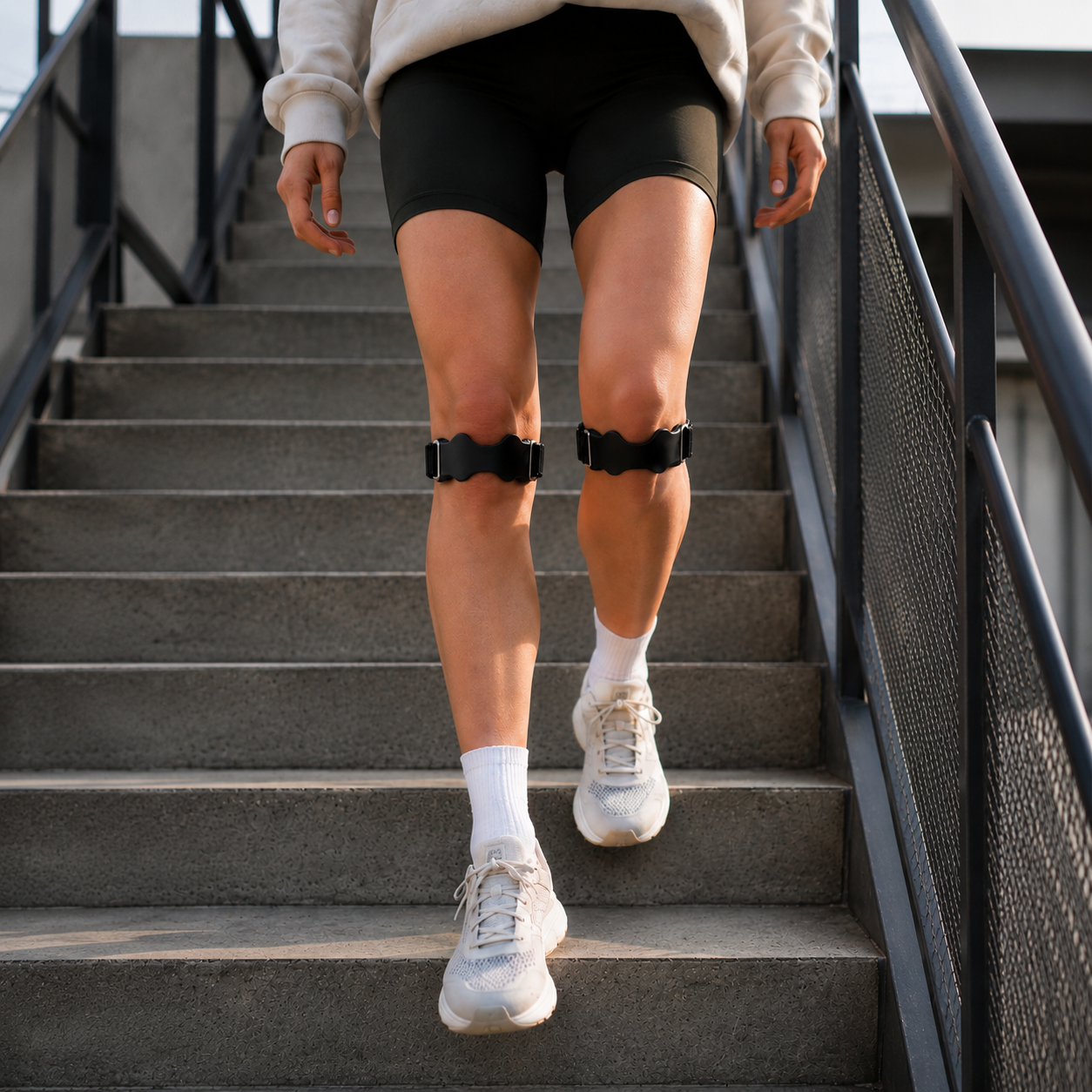
You climb a set of stairs and suddenly your knee protests. Maybe it's a sharp twinge, maybe a dull ache that stops you mid step. Yet walking on flat ground feels completely fine. Strange? Not really.
Climbing stairs puts far more load on the knee than most people realize. With every step up, the joint has to support several times your body weight while bending, stabilizing, and generating enough force to push you upward. If any part of the joint is irritated, inflamed, or weak, that extra demand can bring pain almost instantly.
One of the most common culprits has a name runners know well: patellofemoral pain syndrome, often called "runner's knee." The kneecap stops gliding smoothly over the femur. It rubs. And that friction becomes especially noticeable when the knee bends deeply, which is exactly what happens on stairs.
Muscle strength matters too. Quads, glutes, and hamstrings work as a team to stabilize the leg with every step. When one of them isn't pulling its weight, the knee ends up absorbing a load it was never meant to handle alone. Over time, that extra strain wears down the tissue around the joint.
Joint stiffness doesn't help either, whether it comes from age, arthritis, too many hours sitting, or an old injury. A stiffer knee distributes pressure poorly. Instead of spreading evenly across the cartilage, it concentrates on a few specific spots. And stairs, with their deeper bend, make that problem worse.
Even after a well healed ligament or meniscus injury, some people still feel discomfort on stairs months later. The stabilizing muscles sometimes haven't fully regained their strength, and that slight instability forces the rest of the joint to compensate.
The good news is that stopping movement altogether is almost never the answer. Gentle movement keeps circulation going, helps lubricate the joint, and prevents stiffness from settling in further. The goal is choosing movement that doesn't overload the knee while gradually rebuilding strength and stability.
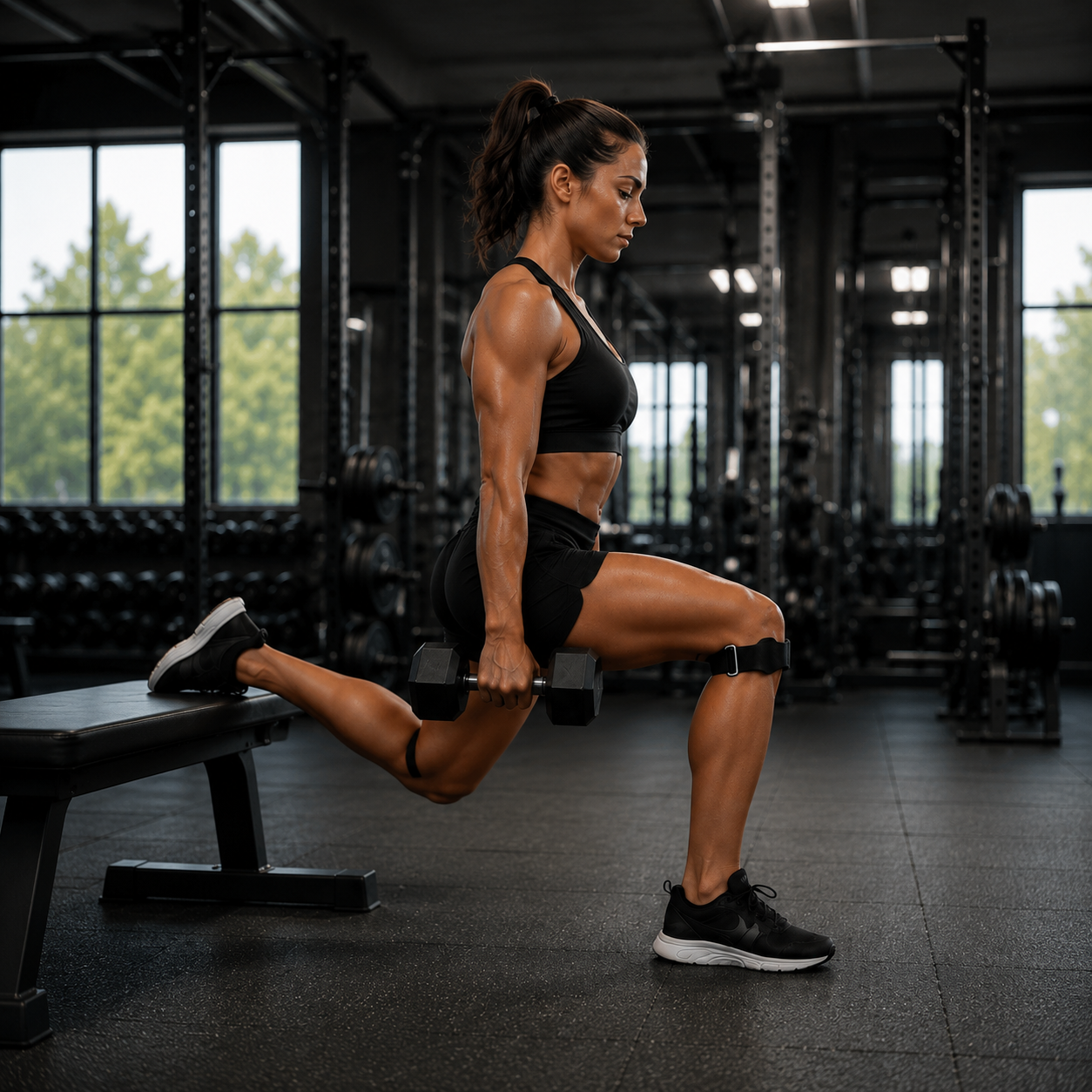
Exercises that strengthen the quads, glutes, and hips tend to work particularly well, since they improve how force gets distributed through the whole leg. Working on ankle and hip mobility helps too, letting the entire lower limb absorb movement more efficiently. Consistency matters far more than intensity. Slow and steady beats pushing through pain almost every time.
Good external support can also make a real difference day to day. A well designed knee strap adds compression and stability, helps the kneecap track more naturally, and limits excessive movement. It doesn't replace strength work or medical advice when that's needed, but it can make stairs noticeably more comfortable and bring back the confidence to stay active.
How you climb matters as well. Slower, controlled steps, using the handrail when needed, avoiding sudden movements: small adjustments like these make a real difference, especially during flare ups.
And if the pain sticks around for weeks, keeps getting worse, comes with swelling, locking, or instability, or stops you from living normally, that's the moment to see a professional. Catching it early often keeps a small issue from turning into a bigger one.
Knee pain on stairs is common. But it isn't something you just have to live with. Understanding why it happens is the first step toward managing it. And with the right mix of strength work, mobility, small adjustments, and proper support, most people get back to climbing stairs without giving it a second thought.


Leave a comment
This site is protected by hCaptcha and the hCaptcha Privacy Policy and Terms of Service apply.