
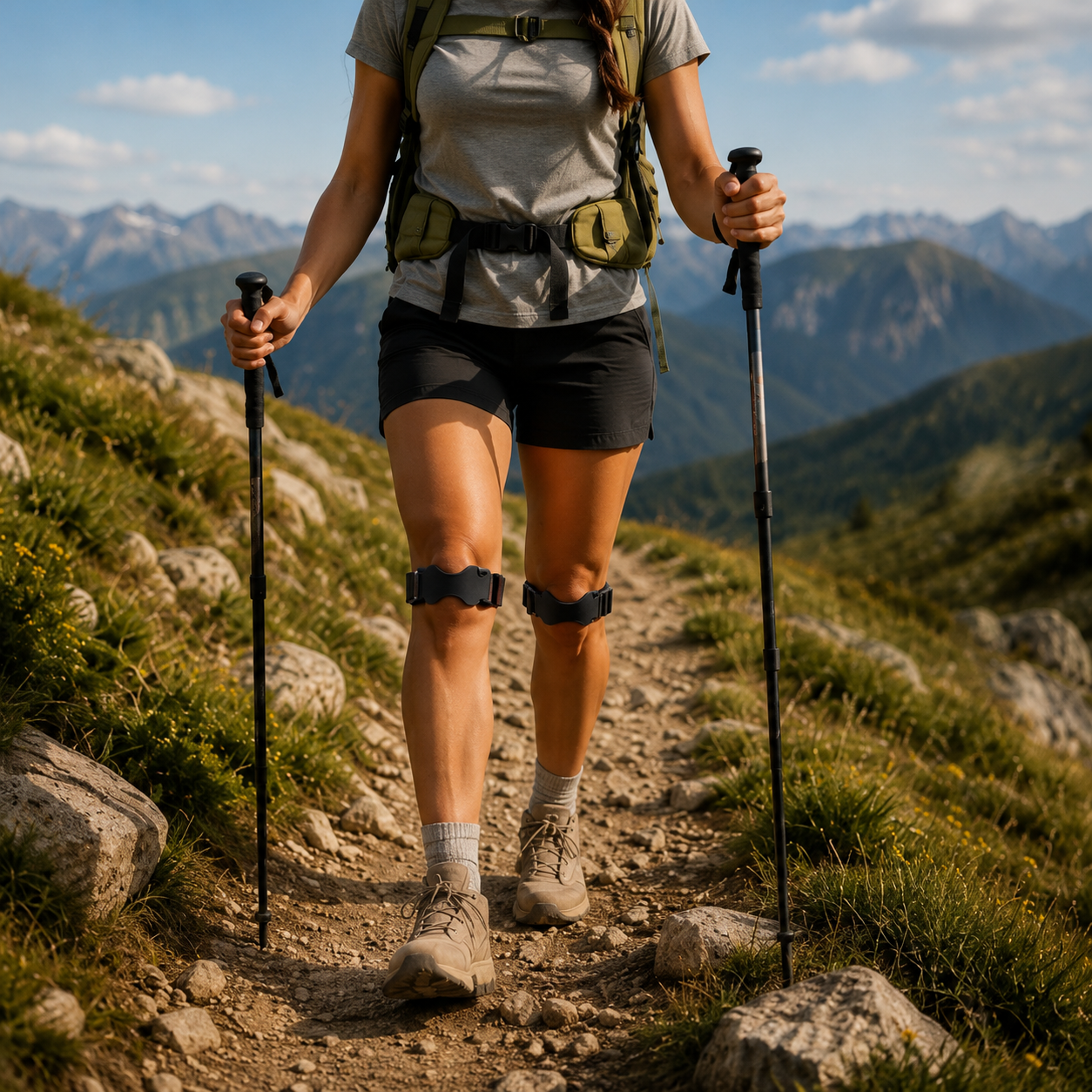
Hiking is one of the best ways to stay active and get outside, but it also puts real stress on the knees. Whether you're on a gentle forest trail or grinding up a steep mountain path, every step tests the muscles, tendons, and joints keeping you moving. If you've ever finished a hike with sore knees, you're in good company. With the right prep and habits, you can cut that discomfort way down and keep enjoying the outdoors for years.
The biggest challenge for your knees usually isn't the climb up. It's the way back down. On the descent, your quads work nonstop to control your speed while your knees absorb far higher impact than they ever do on flat ground. Over a long hike, that repeated pounding leads to muscle fatigue, more pressure on the joint, and soreness around the kneecap.
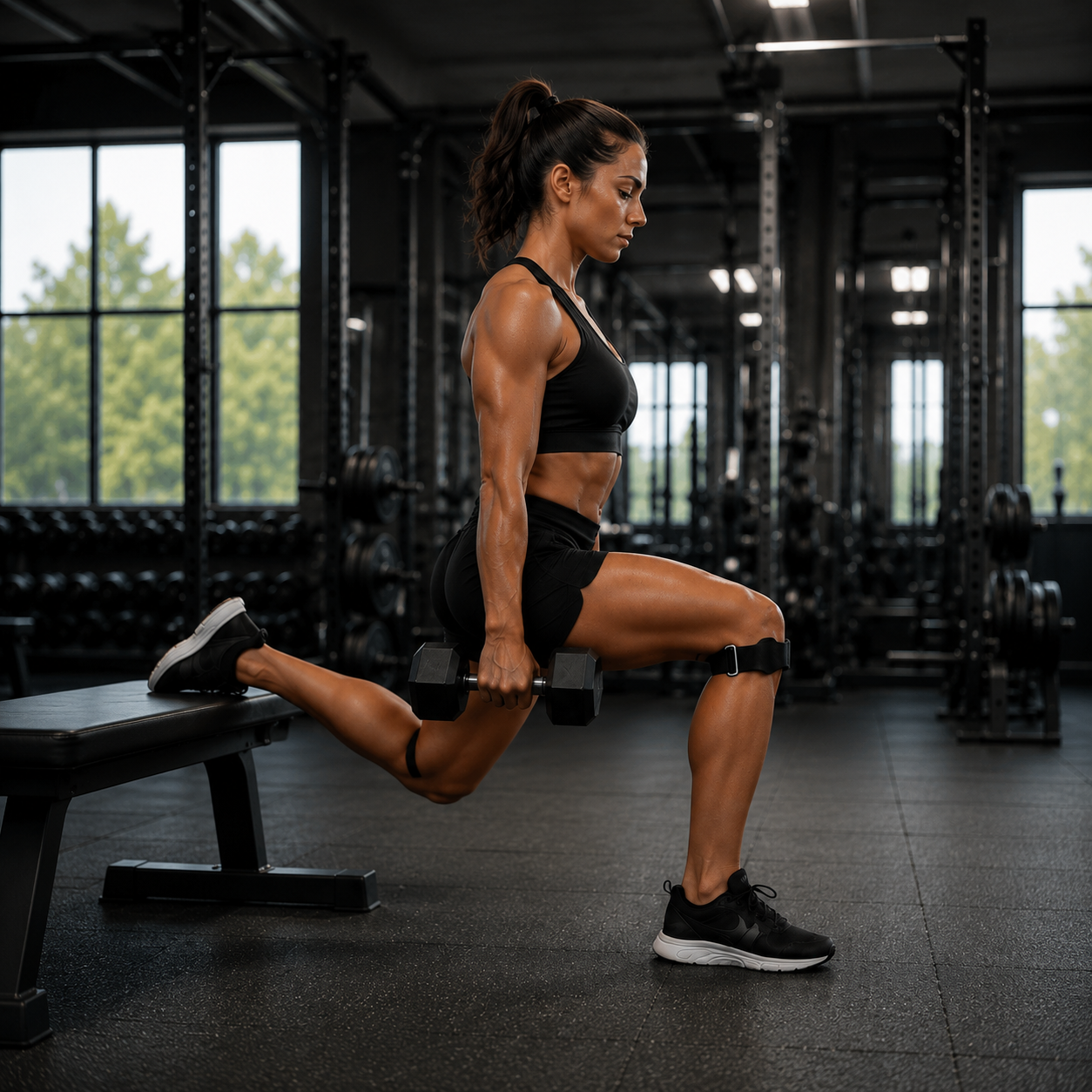
Your muscles do a lot of the protective work here. Strong quads, glutes, hamstrings, and calves act like natural shock absorbers, spreading out the force of every step. When those muscles get tired or just aren't strong enough, the knee joint ends up carrying more of the load on its own. Regular strength training makes hiking feel easier and keeps the joint more stable on uneven terrain.
Footwear plays a bigger role than most people think. Hiking shoes or boots with good support and solid grip keep your stride properly aligned, especially on rocky or slippery ground. Worn out footwear quietly changes your walking mechanics, adding stress to the knees with every step.
The weight on your back matters more than most hikers realize. A heavy pack significantly increases the load on your knees, especially on long descents. Packing only what you need, and adjusting the straps so the weight sits on your hips instead of your shoulders, makes a real difference in how your knees feel by the end of the day.
Trekking poles are worth taking seriously too, not just as an accessory. They transfer some of your body weight through your arms, which takes pressure off the knees, improves balance on uneven ground, and adds stability on steep climbs and descents. A lot of experienced hikers treat them as essential gear, especially on longer or more technical trails.
Warming up before you set off is another habit people skip too often. A few minutes of easy walking plus some gentle mobility work for the ankles, hips, and knees gets the joints ready for what's coming. Short breaks during a long hike matter too, giving the muscles a chance to recover before fatigue starts affecting how you move.
Listening to your body counts for a lot here. Some muscle fatigue is completely normal on a hike. Persistent or sharp knee pain is not something to push through. Slowing down, shortening the route, or taking an extra break can be the difference between a minor issue and something that sidelines you for weeks.
For hikers already dealing with occasional knee discomfort or mild instability, a supportive knee brace can add real confidence on the trail. Compression and gentle stabilization help cut down on unwanted movement while letting you stay active. It's not a substitute for proper training or rehab, but it's a solid addition to a broader approach to protecting your joints.
Recovery after the hike matters just as much as preparation before it. Good hydration, a proper meal, some gentle stretching, and enough time for the muscles to recover all add up to healthier knees over time. Building these habits helps your body adapt to what hiking demands, so the next adventure feels easier than the last.
Healthy knees come from consistent care, not just on the trail but in the days and weeks around it. Strengthen the muscles, pick the right gear, watch your pack weight, use trekking poles, and respect your body's limits, and you'll take real pressure off your joints while enjoying every trail with more comfort and confidence.

Leave a comment
This site is protected by hCaptcha and the hCaptcha Privacy Policy and Terms of Service apply.